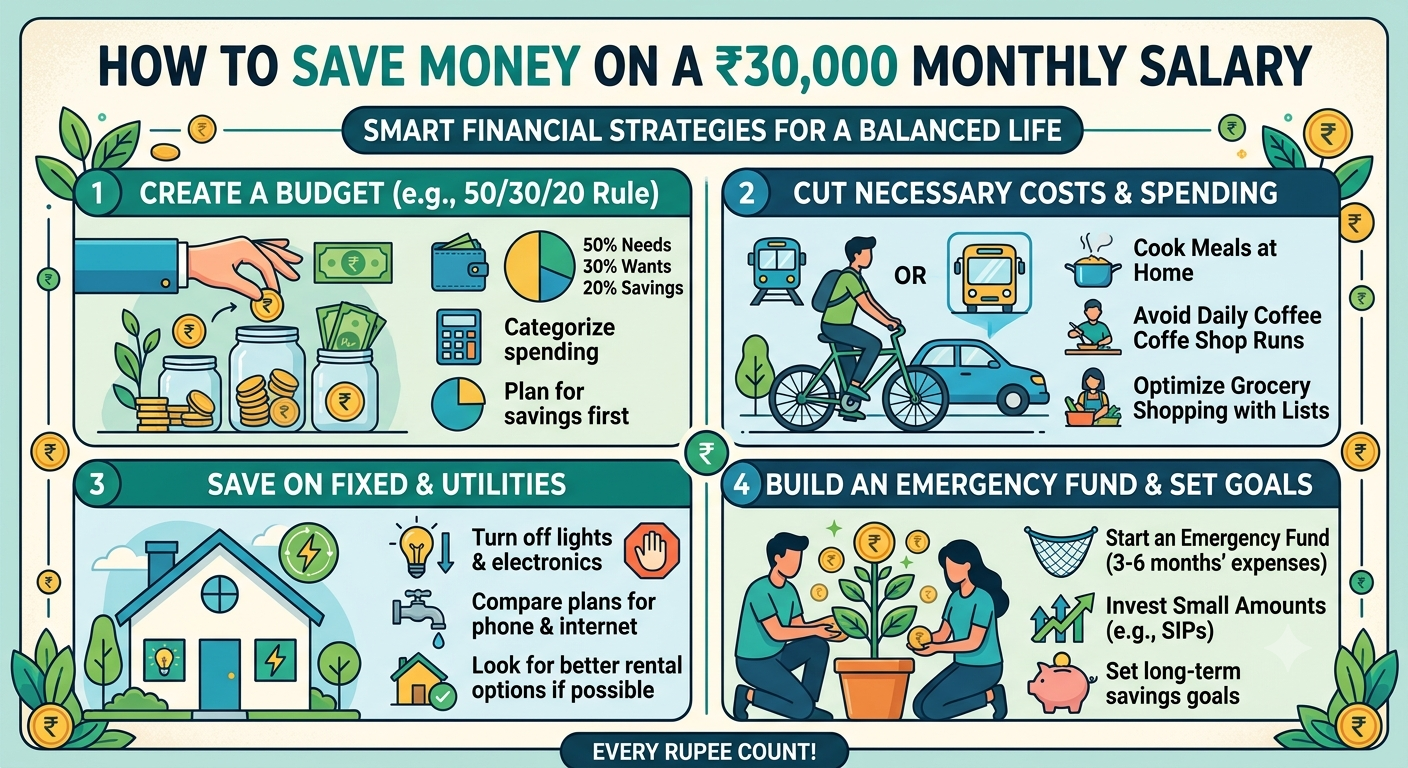
Saving money on a ₹30,000 monthly salary may seem difficult, especially when rent, food, transportation, bills, and other expenses take up a large part of your income. However, saving does not always require earning more. With a clear budget, controlled spending, and consistent financial habits, you can gradually build savings even on a ₹30,000 salary.
The key is to give every rupee a purpose and avoid spending without a plan. Here are some practical ways to save money while managing a ₹30,000 monthly income.
1. Create a Monthly Budget
The first step toward saving money is understanding where your salary goes. At the beginning of every month, make a simple list of your expected income and expenses.
For example, you could divide your ₹30,000 salary approximately like this:
- Rent and household expenses: ₹8,000
- Food and groceries: ₹5,000
- Transportation: ₹2,500
- Electricity, mobile, and internet: ₹2,000
- Personal expenses: ₹2,500
- Savings: ₹6,000
- Emergency fund or investments: ₹4,000
Your actual expenses will depend on your lifestyle and location, but creating categories makes it easier to identify unnecessary spending.
2. Save Money Before You Spend
One of the most effective saving habits is to save immediately after receiving your salary. Instead of spending first and saving whatever remains, transfer a fixed amount to your savings account at the beginning of the month.
For example, if you save ₹5,000 every month, you can build ₹60,000 in one year, excluding any interest or investment returns.
You can also set up an automatic transfer from your salary account to a separate savings account. This reduces the temptation to spend the money.
3. Control Food and Dining Expenses
Food can become a major expense when you frequently order food online, eat at restaurants, or buy expensive coffee and snacks.
Try preparing more meals at home and plan your weekly groceries in advance. Compare prices before purchasing and avoid buying more food than you need.
You do not have to completely stop eating outside. Instead, set a monthly dining budget and stay within it.
Small savings can make a difference. Saving ₹50–₹100 several times a week can potentially save you thousands of rupees over a year.
4. Reduce Unnecessary Subscriptions
Check your monthly subscriptions, including streaming platforms, apps, memberships, and other recurring payments.
You may find that you are paying for services you rarely use. Canceling even two or three unnecessary subscriptions can reduce your monthly expenses.
Make it a habit to review recurring payments every few months and keep only the services that provide real value.
5. Be Careful With Online Shopping
Online shopping makes it easy to spend money impulsively. Discounts can make products appear cheaper, but buying something you do not need is still an expense.
Before purchasing, ask yourself three questions:
- Do I really need this?
- Do I already own something similar?
- Can I wait a few days before buying it?
Using a 24-hour or 48-hour waiting rule for non-essential purchases can help reduce impulse spending.
6. Use Public Transportation When Practical
Transportation costs can quickly increase your monthly expenses. If public transportation is convenient and practical for your daily commute, consider using buses, trains, metro services, or shared transportation.
For shorter distances, walking or cycling can also reduce transportation costs.
If you use a personal vehicle, plan trips efficiently and avoid unnecessary journeys. Regular vehicle maintenance can also help prevent expensive repairs later.
7. Build an Emergency Fund
An emergency fund is important even if your salary is ₹30,000 per month. Unexpected expenses such as medical bills, urgent travel, vehicle repairs, or temporary income loss can affect your finances.
Start with a small target, such as ₹10,000 or ₹20,000, and gradually increase it. Over time, aim to build enough savings to cover several months of essential expenses.
Keep emergency savings separate from your everyday spending account so you are less likely to use the money unnecessarily.
8. Avoid Unnecessary Debt
Credit cards, personal loans, and buy-now-pay-later options can make purchases easier but may create financial pressure if not managed carefully.
Before taking a loan or using credit for a non-essential purchase, consider whether the monthly payment fits comfortably within your budget.
If you already have high-interest debt, prioritizing repayment can be an important part of your savings strategy.
9. Track Every Expense
You cannot improve your finances if you do not know where your money is going. Track your expenses every day or at least once a week.
You can use a notebook, spreadsheet, or budgeting app. Divide your spending into categories such as food, transportation, shopping, entertainment, bills, and savings.
After one month, review the numbers. You may discover small expenses that are taking a surprisingly large portion of your salary.
10. Increase Your Savings Gradually
You do not need to save a huge amount immediately. Start with an amount that is realistic and increase it as your financial situation improves.
For example, you could begin by saving ₹3,000 per month. After a few months, increase it to ₹4,000 or ₹5,000.
When you receive a salary increase, bonus, or additional income, consider directing part of that extra money toward savings instead of increasing your lifestyle expenses.
Conclusion
Saving money on a ₹30,000 monthly salary is possible when you have a clear plan and consistent habits. Creating a budget, saving before spending, reducing unnecessary expenses, controlling online shopping, building an emergency fund, and tracking your spending can help you manage your income more effectively.
The goal is not to avoid every enjoyable expense. Instead, focus on spending intentionally and making regular savings a priority. Even small amounts can add up over time, and developing good money habits today can make managing a larger income much easier in the future.