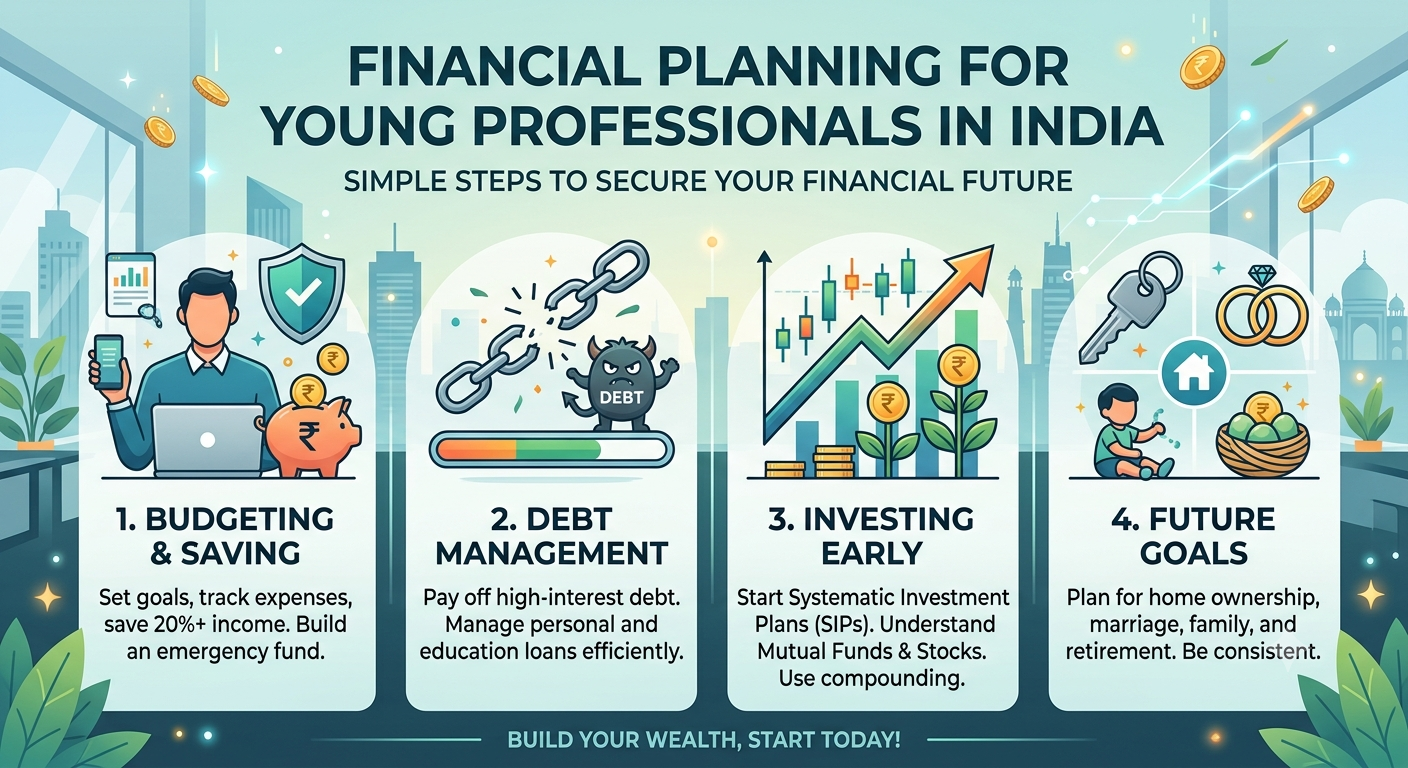
Starting your career is an exciting phase. You have a regular salary, more financial independence, and plenty of plans for the future whether it is buying a car, travelling abroad, purchasing a home, supporting your family, or building a comfortable retirement fund.
But earning money is only the first step. Knowing how to manage, save and invest it is what builds financial security. For young professionals in India, starting financial planning early can make a significant difference over time.
Here is a practical guide to help you gt started.
1. Start With a Realistic Budget
The first step towards financial planning is understanding where your money goes every month. Your salary may look comfortable on paper, but expenses such as rent, food, commuting, subscriptions, shopping and weekend outings can quickly add up.
Create a monthly budget that separates your expenses into three categories:
- Essential expenses: Rent, groceries, utilities, transportation and EMIs.
- Lifestyle expenses: Dining out, entertainment, shopping and travel.
- Financial goals: Savings, investments, insurance and debt repayment.
You do not necessarily need to follow a rigid formula. Instead, create a budget that matches your income, responsibilities and goals. The important thing is to make saving a regular part of your monthly routine rather than saving only what is left at the end of the month.
2. Build an Emergency Fund
An emergency fund is one of the most important foundations of financial planning. Unexpected situations such as job loss, medical expenses, family emergencies or urgent repairs can put pressure on your finances.
Ideally, aim to build an emergency corpus covering several months of essential expenses. Keep this money somewhere that is relatively easy to access rather than putting the entire amount into investments that may fluctuate in value or take time to withdraw.
If building a large emergency fund feels difficult, start small. Even setting aside a fixed amount every month can gradually create a useful financial cushion.
3. Manage Credit Cards and Loans Wisely
Credit cards can be convenient, but they should not become a way to spend money you cannot afford to repay.
Try to pay your credit card bill in full and on time. Carrying unpaid balances can result in significant interest costs. Similarly, before taking a personal loan or other form of credit, understand the interest rate, tenure, processing charges and total repayment amount.
For young professionals, avoiding unnecessary high-cost debt can free up more money for future financial goals.
4. Get Adequate Insurance
Insurance is about protecting your financial plan from unexpected events.
Health insurance is particularly important because a major hospitalisation can create a substantial financial burden. Even if your employer provides health coverage, understand what the policy covers and whether it is sufficient for your circumstances.
Life insurance is generally relevant when someone depends on your income—for example, parents, a spouse or children. The purpose should be financial protection rather than treating insurance primarily as an investment product.
Review your insurance needs as your income, responsibilities and family situation change.
5. Start Investing Early
Once you have a reasonable emergency fund and your basic financial protection is in place, consider investing for long-term goals.
Young professionals often have one major advantage: time. Starting early can give your investments more time to potentially benefit from compounding.
Depending on your goals, risk tolerance and investment horizon, options in India can include bank deposits, government-backed savings products, mutual funds, equities and other regulated investment avenues.
Before investing, understand what you are buying, the associated risks, costs and whether it matches your financial goal. Do not invest simply because a colleague, influencer or friend claims that something is guaranteed to generate high returns.
6. Take Advantage of Your EPF and Other Workplace Benefits
If you work for an organisation that provides an Employees’ Provident Fund (EPF), understand how your contributions work and how they fit into your long-term retirement planning.
Also look at the benefits offered by your employer. These may include health insurance, retirement contributions, leave benefits or other financial benefits.
Many young professionals focus only on their take-home salary and overlook these additional components of their overall compensation.
7. Plan for Short-, Medium and LongTerm Goals
Financial planning becomes easier when you give your money a purpose.
For example:
Short-term goals: Building an emergency fund, buying a laptop or planning a holiday.
Medium-term goals: Higher education, starting a business, purchasing a car or making a home down payment.
Long-term goals: Retirement, children’s education or building long-term wealth.
Different goals may require different savings and investment strategies. Money that you need soon generally should not be exposed to the same level of investment risk as money intended for a goal decades away.
8. Increase Your Savings as Your Salary Grows
One common mistake among young professionals is increasing lifestyle expenses every time their salary increases.
When you receive a promotion, annual increment or bonus, consider increasing your savings and investments before upgrading your lifestyle. This does not mean you should stop enjoying your income. Instead, try to maintain a balance between enjoying the present and preparing for the future.
Even a modest increase in your monthly investment can become meaningful over many years.
9. Review Your Financial Plan Regularly
Financial planning is not a one-time activity. Your income, expenses, career, family responsibilities and goals will change over time.
Set aside some time at least once or twice a year to review your budget, emergency fund, insurance, investments, loans and financial goals. Make adjustments whenever your circumstances change.
Conclusion
For young professionals in India, financial planning does not have to be complicated. The basics are straightforward: spend consciously, build an emergency fund, manage debt, protect yourself with appropriate insurance, invest according to your goals and start early.
You do not need a huge salary to begin. What matters more is developing consistent financial habits and gradually improving them as your income grows.
The earlier you start treating your salary as a tool for both today’s lifestyle and tomorrow’s goals, the more control you can build over your financial future.